Keynote Talks
The keynote talks will take place on November 14 and 15, 2026. One asks whether large language models can truly understand the culture behind language; the other explores how artificial intelligence can move from passive responses to proactive perception and decision-making. Understanding and action are two of the most compelling directions in current machine translation and AI agent research.
Keynote 1: Derek F. Wong
University of Macau
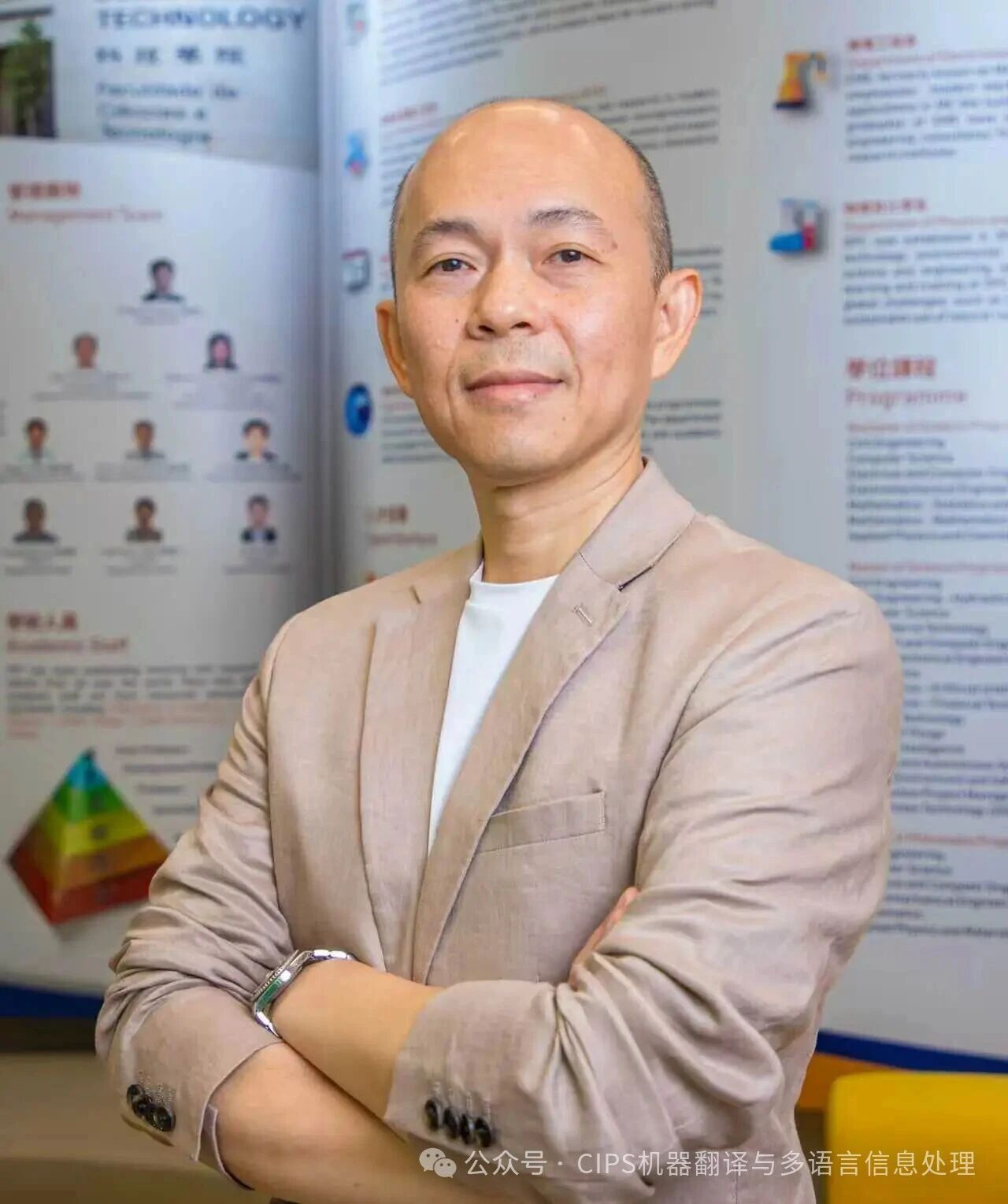
Title: Beyond Words: Can LLMs Capture Culture in Machine Translation?
Abstract: Culture-aware machine translation requires AI systems to move beyond word-level equivalence and capture culturally grounded meanings in idioms, metaphors, and figurative expressions. This talk reports our recent studies on how large language models handle such expressions across multilingual settings. We examine retrieval-augmented translation, cross-lingual idiom alignment, metaphor processing, and literal translation bias. Our findings show that glosses and retrieved knowledge can improve semantic grounding, but models often over-rely on noisy context, favor literal renderings, and fail to self-verify. Even when models detect an idiom and correctly explain its meaning, they may still translate it literally, revealing a gap between understanding and generation. We further show that figurative processing is shaped by lexical anchors, semantic drift, syntactic cues, and language-direction effects. Overall, the talk highlights both the promise and fragility of current LLM-based translation, and argues for more reliable, diagnostic, and culturally aware MT systems.
Bio: Derek F. Wong is a Full Professor at the University of Macau (UM), where he leads the Natural Language Processing and Chinese–Portuguese Machine Translation Laboratory (NLP2CT Lab). He serves on the boards and committees of CIPS, CCF, and AFNLP, and holds editorial roles with IEEE/ACM TASLP, ACM TALLIP, TACL, and the ACL Rolling Review. His research has earned multiple honors, including the Macao Science and Technology Awards (2012, 2022), the FST Research Excellence Award, and both the Outstanding Academic Staff Incentive (2022) and Teaching Excellence Award (2024) from UM. He has also contributed to major NLP conferences such as ACL, NeurIPS, ICML, IJCAI, AAAI, EMNLP, NAACL, COLING, AACL, and IJCNLP in various program leadership roles.
Keynote 2: Bing Qin
Harbin Institute of Technology
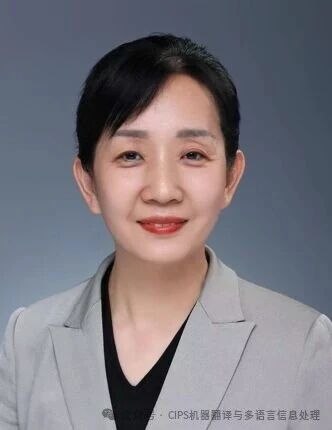
Title: Proactive Intelligence: From Passive Response to Autonomous Perception and Decision-Making
Abstract: With the rapid development of large language models and AI agent technologies, artificial intelligence is evolving from passive responses toward proactive perception, autonomous decision-making, and action. This talk covers the concept, technical foundations, industry landscape, and research progress of proactive intelligence. It explains the core principles of proactive intelligence, examines the capabilities and development of proactive agents in China and internationally, and proposes a technical framework that integrates long- and short-term memory with continuous state monitoring, intervention timing, reasoning and planning, and autonomous evolution. The talk presents representative results from the team's research on streaming multimodal understanding, proactive timing decisions, reasoning for complex tasks, tool-use optimization, and long- and short-term memory management. It concludes with key challenges and future directions for proactive intelligence.
Bio: Bing Qin is a tenured professor at Harbin Institute of Technology and Director of its Research Center for Social Computing and Interactive Robotics. She is an Executive Council Member of the Chinese Information Processing Society of China (CIPS), Chair of the CIPS Technical Committee on Affective Computing, and a member of the management expert group for the Ministry of Science and Technology's Science and Technology Innovation 2030—“Next-Generation Artificial Intelligence” major project. She has published more than 200 papers, with over 40,000 citations. She has been named an Elsevier Highly Cited Chinese Researcher for multiple consecutive years and was included in the Forbes China Top Women in Tech list in 2020. Her honors include first prizes in the Ministry of Education's Outstanding Scientific Research Achievement Awards (Engineering and Technology), the Heilongjiang Provincial Science and Technology Progress Awards, and the CCF Science and Technology Achievement Awards (Science and Technology Progress).